.jpg)
.jpg)
Why Pharma Companies Are Switching to Ready-to-Use Coating Systems and What to Look for in a Supplier
INTRODUCTION
The pharmaceutical manufacturing landscape is undergoing a significant transformation. An increasing number of formulation teams are transitioning from in-house pharmaceutical coating polymer blending to ready-to-use tablet coating systems. This shift represents more than operational convenience; it reflects a strategic response to rising manufacturing complexity, regulatory scrutiny, and cost pressures.
Ready-to-use tablet coating systems eliminate formulation variability by consolidating pharmaceutical coating polymers, plasticisers, pigments, and process aids into pre-validated solutions. For manufacturers, this translates to reduced batch failures, accelerated development timelines, simplified compliance documentation, and lower total cost of ownership.
At Vikram Thermo, we understand this transition intimately. With over 40 years of pharmaceutical excipient manufacturing experience, we've guided hundreds of manufacturers through this journey, helping them identify the right suppliers and implementation strategies that deliver real results.
DEFINITION: READY-TO-USE TABLET COATING SYSTEMS
A ready-to-use tablet coating system is a preformulated, pharmaceutically validated blend requiring only dilution with an appropriate solvent before application to tablet cores. Unlike traditional pharmaceutical coating polymers purchased separately, these systems arrive with pre-established viscosity profiles, film-forming temperatures, dissolution specifications, and stability data validated across industrial process conditions.
The pharmaceutical coating system undergoes comprehensive characterisation by the manufacturer before supply. Critical parameters - Minimum Film Forming Temperature (MFFT), plasticiser concentration, pigment loading, and process aid ratios are already optimised for consistent performance within defined process windows.
This pre-validation distinguishes ready-to-use systems from simple polymer-plasticiser combinations. You receive not just ingredients but proven polymer excipients. manufacturer-engineered formulation technology, eliminating the need to source pharmaceutical ingredient supplier components separately.
TYPES AND CATEGORIES OF READY-TO-USE COATING SYSTEMS
Immediate Release (IR) Systems
Aqueous film coating systems designed for protective and aesthetic functions: moisture barriers, taste masking, and product identification. HPMC-based or PVA-based ready-to-use tablet coating systems deliver rapid dissolution while providing mechanical protection. Our DRCOAT® FCA and HSP systems represent standard aqueous film coating system options that accommodate non-acid-labile APIs across immediate-release coating polymer applications.
Enteric-Coated Systems
pH-responsive pharmaceutical coating systems employing methacrylic acid copolymers that remain intact in gastric conditions and dissolve at target intestinal pH levels. Enteric coating polymer systems range from pH 5.5 formulations (small intestine targeting) to pH 7.0 variants (colon-specific delivery). Our ready-to-use enteric systems eliminate the need for separate L-series or S-series polymer sourcing, delivering consistent performance across manufacturing scales.
Sustained and Controlled Release Systems
Semi-permeable membrane film coating systems for tablets incorporating ammonio methacrylate copolymers (RL and RS series). These sustained-release coating polymer systems control drug diffusion through membrane permeability, supporting narrow therapeutic index drugs requiring dose uniformity. Our pre-formulated systems arrive with validated plasticiser concentrations, preventing membrane defects and dose dumping, eliminating one of the most critical quality risks in extended-release manufacturing.
Moisture Barrier Systems
Protective ready-to-use tablet coating premix formulations safeguarding hygroscopic APIs throughout shelf life. Our moisture barrier coating systems achieve target water vapour transmission rates through optimised polymer-plasticiser ratios and coat weight specifications. These functional excipients in pharmaceutical formulations provide superior protection compared to traditional compounded systems, backed by decades of stability data across diverse climate conditions.
Specialty Systems
Colour-coated, pearlescent, and flavoured ready-to-use tablet coating systems supporting brand differentiation and patient compliance initiatives. Our taste-masking coating systems incorporate DRUGCOAT® E-series gastric-soluble polymers, ensuring bitterness masking without compromising API bioavailability.
HOW PHARMACEUTICAL COATING SYSTEMS WORK: THE MECHANISM
Ready-to-use tablet coating systems function through controlled film formation governed by precise physicochemical parameters.
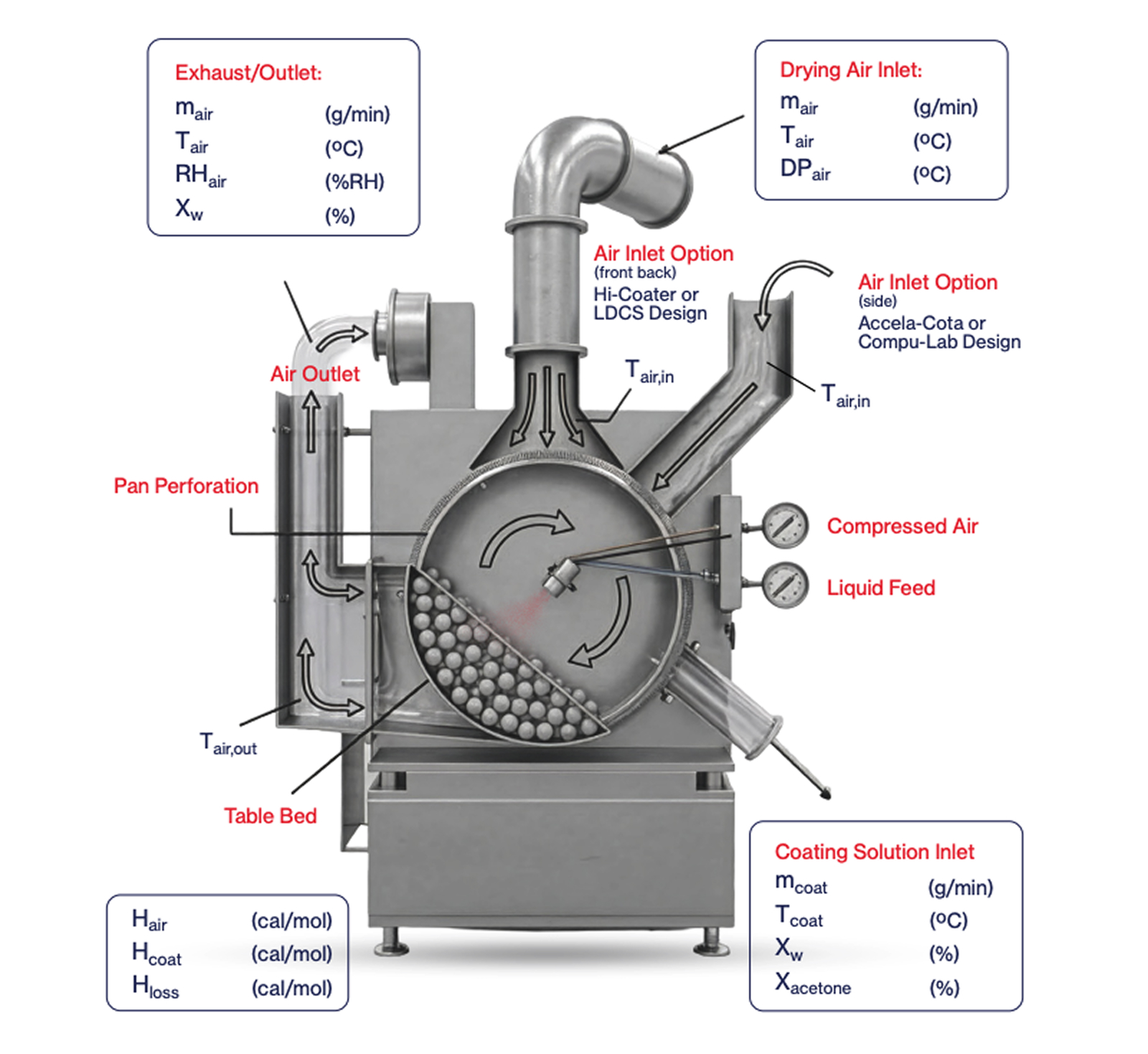
The pharmaceutical coating system is atomised as fine droplets onto rotating tablet beds. Optimal droplet size ensures deposition before premature drying occurs. Upon contact with tablet surfaces, droplets spread and coalesce, governed by the polymer's MFFT, the minimum temperature at which polymer particles fuse into a continuous film.
Critical to success: plasticiser balance. Insufficient plasticiser prevents MFFT achievement, producing brittle, porous films prone to cracking. Excessive plasticiser keeps films tacky, causing inter-tablet sticking. Our pre-formulated ready-to-use systems arrive with plasticiser concentrations precisely calibrated for the intended polymer type and process window, a calibration refined through thousands of manufacturing batches across global operations.
For sustained-release and enteric systems, post-coating curing (typically 40–60°C, 12–24 hours) completes polymer coalescence. Without curing, density changes during storage cause progressive dissolution rate drift, rendering products out-of-specification within months. This is why our formulations specify mandatory curing protocols and provide data supporting them.
The film coating system for tablets thus balances chemistry (polymer, plasticiser and solvent interactions) with process parameters (temperature, humidity and spray rate) to produce functionally sound coatings consistently.
APPLICATIONS ACROSS SOLID DOSAGE FORMS
Immediate Release Applications
Non-acid-labile APIs requiring protective coatings rely on aqueous film coating systems. Our ready-to-use tablet coating systems provide 2–3% coat weight gain, sufficient for moisture barrier function and taste masking. DRCOAT® FCA, HSP, and equivalent systems serve this category across OTC analgesics, antihistamines, and vitamin formulations. We've supported over 500+ approved products using these platforms globally.
Enteric-Targeted Delivery
Proton pump inhibitors, H₂-receptor antagonists, and other acid-labile compounds mandate enteric coating polymer technology. Our ready-to-use enteric systems deliver pH 5.5 dissolution (small intestine) or pH 7.0 (colon), eliminating formulation decisions from development timelines. DRCOAT® ECA supports aqueous processing; DRCOAT® ECS handles non-aqueous workflows. We provide comprehensive pH dissolution validation data for regulatory filings.
Sustained-Release Formulations
Narrow therapeutic index drugs (theophylline and digoxin derivatives) require controlled permeation membranes, preventing dose dumping. Our ready-to-use sustained-release coating polymer systems using RL/RS technology arrive pre-balanced for specific permeability targets. We've engineered these formulations through rigorous bioequivalence studies, ensuring membrane consistency that eliminates the risk of dose dumping failures.
Moisture-Sensitive APIs
Hygroscopic activities degrading rapidly above specific relative humidity require barrier coatings achieving water vapour transmission rates below 0.5 mg/cm²/day. Our moisture barrier coating systems, pre-formulated with optimised polymer-plasticiser ratios and applying 3–5% coat weight gain, provide reliable protection throughout shelf life. We validate performance across tropical, temperate, and cold storage conditions critical for global supply chains.
COMPARISON TABLE: READY-TO-USE SYSTEMS VS TRADITIONAL IN-HOUSE BLENDING
TROUBLESHOOTING: TABLET COATING DEFECTS AND SOLUTIONS
Challenge 1: Process Window Deviation
Ready-to-use tablet coating systems carry embedded assumptions about spray rate, inlet temperature, and pan speed. Deviations outside validated ranges violate performance guarantees. Resolution: Strict adherence to supplier-defined process windows during tech transfer; early deviation monitoring during pilot batches. We provide real-time process monitoring guidance during your tech transfer phase.
Challenge 2: Preventing Tablet Coating Defects and Solutions Through Proper Equipment Compatibility
Viscosity profiles optimised for one atomiser type may perform poorly on different spray gun configurations. Ready-to-use systems significantly reduce tablet coating defects and solutions by ensuring consistency across equipment types. Resolution: Conduct spray characterisation studies before commercial implementation. Our technical team provides equipment-specific viscosity targets and spray optimisation protocols for Freund, Glatt, Accela-Cota, and other major coating systems.
Challenge 3: Raw Material Availability and Lead Times
Dependency on a single tablet-coating-material supplier introduces supply-chain risk but only if the supplier lacks resilience. Resolution: We maintain inventory buffers across multiple warehouses globally. Our manufacturing facilities in India and partnerships with regional distributors ensure 24-hour emergency supply. Quality agreements specify transition protocols and backup sourcing arrangements.
Challenge 4: Formulation Customisation Constraints
Standard ready-to-use systems address 80–90% of commercial needs. Proprietary requirements demand custom formulations, increasing cost and lead time. Resolution: We maintain dedicated R&D capabilities for custom formulations. Lead times for development are 8-12 weeks; we've supported bespoke needs for 60+ pharmaceutical companies requiring non-standard polymer ratios or pigment combinations.
Challenge 5: Regulatory Transition Complexity
Switching from approved in-house formulations to ready-to-use systems requires amendment filings in many jurisdictions. Resolution: We provide complete regulatory support drafting amendments, coordinating with regulatory agencies, and providing technical justification for bioequivalence. Our DMF is pre-approved in 65+ countries, accelerating your approval timelines.
VIKRAM THERMO'S MARKET POSITION
We understand the risk inherent in switching suppliers. Over 40 years of pharmaceutical excipient manufacturing has taught us what stability, consistency, and partnership truly mean.
Vikram Thermo (India) Ltd operates as a leading pharma raw material supplier in India and a trusted tablet coating materials supplier serving pharmaceutical companies across 45+ countries. We serve as a comprehensive pharmaceutical ingredients supplier, not just a polymer vendor.
Our DRUGCOAT® range encompasses the enteric L/S series (pH 5.5–7.0), sustained-release RL/RS/NE series, and gastric-soluble E series. Our DRCOAT® ready-to-use systems span immediate release (HPMC/PVA-based), enteric, moisture barrier, and speciality applications.
India's first EXCiPACT GMP-certified polymer company, we maintain US DMF registration, WHO cGMP compliance, and ISO 9001 certification. More importantly, we've backed our systems with comprehensive technical support: process windows validated across equipment types, stability data spanning 5+ years, and on-site troubleshooting during your technology transfer.
We don't view suppliers as transactional. We partner with manufacturers through development, scale-up, regulatory approval, and commercial launch. When you succeed, we succeed. That commitment is built into every formulation we deliver.
FAQs
1. What is the primary driver for pharmaceutical companies switching to ready-to-use tablet coating systems?
Total cost of ownership reduction. While unit costs may be 10–15% higher, savings from eliminated blending labour, reduced batch failures (5–8% baseline vs. 1–3% with validated systems), avoided raw material waste, and simplified regulatory documentation typically deliver a 20–30% net cost advantage over the product lifecycle.
2. How do ready-to-use tablet coating systems maintain batch-to-batch consistency?
Preformulated systems leverage the supplier's manufacturing controls, validated mixing procedures, raw material specifications, in-process testing, and release criteria. Consistency is built into the manufacturing process, not reliant on user technique. This is a key advantage over traditional pharmaceutical ingredient supplier models, requiring multiple vendor coordination. Our batches show <2% viscosity variation batch-to-batch, a standard unattainable through in-house blending.
3. Can we switch tablet coating materials suppliers mid-product lifecycle?
Switching creates regulatory risk and operational disruption. Quality agreements should specify transition protocols, 12–24 month notice periods, and supplier support for reformulation validation. We've successfully transitioned products from competitor systems to ours with zero regulatory impact. We provide bridge batches, stability support, and coordinated regulatory filing assistance.
4. What technical due diligence should we conduct during supplier evaluation?
Request process window data across spray rate, temperature, and pan speed ranges; stability data under accelerated conditions; comparative tablet coating defects and solutions assessments vs. competing systems; audit reports; and DMF registration documentation. Conduct on-site trials before committing to commercial supply. We welcome facility audits, provide 100+ pages of technical documentation, and offer pilot batch support at no cost.
5. Are ready-to-use systems suitable for all API types?
Most APIs can be accommodated through immediate release, enteric, or sustained-release variants. Custom formulations address specialised needs (complex release kinetics, unusual polymer requirements) but carry longer lead times and premium costs. Our portfolio covers 95% of commercial formulation requirements; we rarely require custom development.
6. How does GMP excipient manufacturer certification impact supplier credibility?
EXCiPACT certification (or equivalent) demonstrates third-party validation of manufacturing controls, quality systems, and compliance frameworks. US DMF registration and WHO cGMP compliance further de-risk supplier relationships by ensuring regulatory acceptance in major markets. We hold all three certifications. More importantly, we've maintained EXCiPACT status continuously since 2015 without corrective action, a distinction held by only 12 manufacturers globally.
CONCLUSION
The transition to ready-to-use tablet coating systems reflects rational economics and risk management. Pre-formulated pharmaceutical coating systems eliminate formulation variability, accelerate development, and simplify compliance while reducing total cost of ownership.
Success depends on rigorous supplier evaluation. Select tablet coating material suppliers demonstrating regulatory standing (GMP certification, DMF registration, and WHO compliance), technical depth (process characterisation, stability data, and troubleshooting support), supply chain resilience, and genuine partnership commitment. Evaluate whether your potential supplier operates as both a pharmaceutical raw material supplier in India or globally and an ingredient supplier capable of supporting your long-term strategy.
At Vikram Thermo, we've built our 40+ year legacy on exactly this foundation: regulatory rigour, technical excellence, supply chain resilience, and partnership commitment. We're not a commodity supplier. We're your formulation partner through development, approval, and commercial success.
For manufacturers evaluating the transition, the starting point is detailed vendor assessment followed by robust development validation. Get supplier selection right, and ready-to-use systems become a strategic advantage. Get it wrong, and convenience masks underlying fragility.
We're ready to support your transition. Let's talk about what your products need.
Why Pharma Companies Are Switching to Ready-to-Use Coating Systems and What to Look for in a Supplier
INTRODUCTION
The pharmaceutical manufacturing landscape is undergoing a significant transformation. An increasing number of formulation teams are transitioning from in-house pharmaceutical coating polymer blending to ready-to-use tablet coating systems. This shift represents more than operational convenience; it reflects a strategic response to rising manufacturing complexity, regulatory scrutiny, and cost pressures.
Ready-to-use tablet coating systems eliminate formulation variability by consolidating pharmaceutical coating polymers, plasticisers, pigments, and process aids into pre-validated solutions. For manufacturers, this translates to reduced batch failures, accelerated development timelines, simplified compliance documentation, and lower total cost of ownership.
At Vikram Thermo, we understand this transition intimately. With over 40 years of pharmaceutical excipient manufacturing experience, we've guided hundreds of manufacturers through this journey, helping them identify the right suppliers and implementation strategies that deliver real results.
DEFINITION: READY-TO-USE TABLET COATING SYSTEMS
A ready-to-use tablet coating system is a preformulated, pharmaceutically validated blend requiring only dilution with an appropriate solvent before application to tablet cores. Unlike traditional pharmaceutical coating polymers purchased separately, these systems arrive with pre-established viscosity profiles, film-forming temperatures, dissolution specifications, and stability data validated across industrial process conditions.
The pharmaceutical coating system undergoes comprehensive characterisation by the manufacturer before supply. Critical parameters - Minimum Film Forming Temperature (MFFT), plasticiser concentration, pigment loading, and process aid ratios are already optimised for consistent performance within defined process windows.
This pre-validation distinguishes ready-to-use systems from simple polymer-plasticiser combinations. You receive not just ingredients but proven polymer excipients. manufacturer-engineered formulation technology, eliminating the need to source pharmaceutical ingredient supplier components separately.
TYPES AND CATEGORIES OF READY-TO-USE COATING SYSTEMS
Immediate Release (IR) Systems
Aqueous film coating systems designed for protective and aesthetic functions: moisture barriers, taste masking, and product identification. HPMC-based or PVA-based ready-to-use tablet coating systems deliver rapid dissolution while providing mechanical protection. Our DRCOAT® FCA and HSP systems represent standard aqueous film coating system options that accommodate non-acid-labile APIs across immediate-release coating polymer applications.
Enteric-Coated Systems
pH-responsive pharmaceutical coating systems employing methacrylic acid copolymers that remain intact in gastric conditions and dissolve at target intestinal pH levels. Enteric coating polymer systems range from pH 5.5 formulations (small intestine targeting) to pH 7.0 variants (colon-specific delivery). Our ready-to-use enteric systems eliminate the need for separate L-series or S-series polymer sourcing, delivering consistent performance across manufacturing scales.
Sustained and Controlled Release Systems
Semi-permeable membrane film coating systems for tablets incorporating ammonio methacrylate copolymers (RL and RS series). These sustained-release coating polymer systems control drug diffusion through membrane permeability, supporting narrow therapeutic index drugs requiring dose uniformity. Our pre-formulated systems arrive with validated plasticiser concentrations, preventing membrane defects and dose dumping, eliminating one of the most critical quality risks in extended-release manufacturing.
Moisture Barrier Systems
Protective ready-to-use tablet coating premix formulations safeguarding hygroscopic APIs throughout shelf life. Our moisture barrier coating systems achieve target water vapour transmission rates through optimised polymer-plasticiser ratios and coat weight specifications. These functional excipients in pharmaceutical formulations provide superior protection compared to traditional compounded systems, backed by decades of stability data across diverse climate conditions.
Specialty Systems
Colour-coated, pearlescent, and flavoured ready-to-use tablet coating systems supporting brand differentiation and patient compliance initiatives. Our taste-masking coating systems incorporate DRUGCOAT® E-series gastric-soluble polymers, ensuring bitterness masking without compromising API bioavailability.
HOW PHARMACEUTICAL COATING SYSTEMS WORK: THE MECHANISM
Ready-to-use tablet coating systems function through controlled film formation governed by precise physicochemical parameters.
The pharmaceutical coating system is atomised as fine droplets onto rotating tablet beds. Optimal droplet size ensures deposition before premature drying occurs. Upon contact with tablet surfaces, droplets spread and coalesce, governed by the polymer's MFFT, the minimum temperature at which polymer particles fuse into a continuous film.
Critical to success: plasticiser balance. Insufficient plasticiser prevents MFFT achievement, producing brittle, porous films prone to cracking. Excessive plasticiser keeps films tacky, causing inter-tablet sticking. Our pre-formulated ready-to-use systems arrive with plasticiser concentrations precisely calibrated for the intended polymer type and process window, a calibration refined through thousands of manufacturing batches across global operations.
For sustained-release and enteric systems, post-coating curing (typically 40–60°C, 12–24 hours) completes polymer coalescence. Without curing, density changes during storage cause progressive dissolution rate drift, rendering products out-of-specification within months. This is why our formulations specify mandatory curing protocols and provide data supporting them.
The film coating system for tablets thus balances chemistry (polymer, plasticiser and solvent interactions) with process parameters (temperature, humidity and spray rate) to produce functionally sound coatings consistently.
APPLICATIONS ACROSS SOLID DOSAGE FORMS
Immediate Release Applications
Non-acid-labile APIs requiring protective coatings rely on aqueous film coating systems. Our ready-to-use tablet coating systems provide 2–3% coat weight gain, sufficient for moisture barrier function and taste masking. DRCOAT® FCA, HSP, and equivalent systems serve this category across OTC analgesics, antihistamines, and vitamin formulations. We've supported over 500+ approved products using these platforms globally.
Enteric-Targeted Delivery
Proton pump inhibitors, H₂-receptor antagonists, and other acid-labile compounds mandate enteric coating polymer technology. Our ready-to-use enteric systems deliver pH 5.5 dissolution (small intestine) or pH 7.0 (colon), eliminating formulation decisions from development timelines. DRCOAT® ECA supports aqueous processing; DRCOAT® ECS handles non-aqueous workflows. We provide comprehensive pH dissolution validation data for regulatory filings.
Sustained-Release Formulations
Narrow therapeutic index drugs (theophylline and digoxin derivatives) require controlled permeation membranes, preventing dose dumping. Our ready-to-use sustained-release coating polymer systems using RL/RS technology arrive pre-balanced for specific permeability targets. We've engineered these formulations through rigorous bioequivalence studies, ensuring membrane consistency that eliminates the risk of dose dumping failures.
Moisture-Sensitive APIs
Hygroscopic activities degrading rapidly above specific relative humidity require barrier coatings achieving water vapour transmission rates below 0.5 mg/cm²/day. Our moisture barrier coating systems, pre-formulated with optimised polymer-plasticiser ratios and applying 3–5% coat weight gain, provide reliable protection throughout shelf life. We validate performance across tropical, temperate, and cold storage conditions critical for global supply chains.
COMPARISON TABLE: READY-TO-USE SYSTEMS VS TRADITIONAL IN-HOUSE BLENDING
TROUBLESHOOTING: TABLET COATING DEFECTS AND SOLUTIONS
Challenge 1: Process Window Deviation
Ready-to-use tablet coating systems carry embedded assumptions about spray rate, inlet temperature, and pan speed. Deviations outside validated ranges violate performance guarantees. Resolution: Strict adherence to supplier-defined process windows during tech transfer; early deviation monitoring during pilot batches. We provide real-time process monitoring guidance during your tech transfer phase.
Challenge 2: Preventing Tablet Coating Defects and Solutions Through Proper Equipment Compatibility
Viscosity profiles optimised for one atomiser type may perform poorly on different spray gun configurations. Ready-to-use systems significantly reduce tablet coating defects and solutions by ensuring consistency across equipment types. Resolution: Conduct spray characterisation studies before commercial implementation. Our technical team provides equipment-specific viscosity targets and spray optimisation protocols for Freund, Glatt, Accela-Cota, and other major coating systems.
Challenge 3: Raw Material Availability and Lead Times
Dependency on a single tablet-coating-material supplier introduces supply-chain risk but only if the supplier lacks resilience. Resolution: We maintain inventory buffers across multiple warehouses globally. Our manufacturing facilities in India and partnerships with regional distributors ensure 24-hour emergency supply. Quality agreements specify transition protocols and backup sourcing arrangements.
Challenge 4: Formulation Customisation Constraints
Standard ready-to-use systems address 80–90% of commercial needs. Proprietary requirements demand custom formulations, increasing cost and lead time. Resolution: We maintain dedicated R&D capabilities for custom formulations. Lead times for development are 8-12 weeks; we've supported bespoke needs for 60+ pharmaceutical companies requiring non-standard polymer ratios or pigment combinations.
Challenge 5: Regulatory Transition Complexity
Switching from approved in-house formulations to ready-to-use systems requires amendment filings in many jurisdictions. Resolution: We provide complete regulatory support drafting amendments, coordinating with regulatory agencies, and providing technical justification for bioequivalence. Our DMF is pre-approved in 65+ countries, accelerating your approval timelines.
VIKRAM THERMO'S MARKET POSITION
We understand the risk inherent in switching suppliers. Over 40 years of pharmaceutical excipient manufacturing has taught us what stability, consistency, and partnership truly mean.
Vikram Thermo (India) Ltd operates as a leading pharma raw material supplier in India and a trusted tablet coating materials supplier serving pharmaceutical companies across 45+ countries. We serve as a comprehensive pharmaceutical ingredients supplier, not just a polymer vendor.
Our DRUGCOAT® range encompasses the enteric L/S series (pH 5.5–7.0), sustained-release RL/RS/NE series, and gastric-soluble E series. Our DRCOAT® ready-to-use systems span immediate release (HPMC/PVA-based), enteric, moisture barrier, and speciality applications.
India's first EXCiPACT GMP-certified polymer company, we maintain US DMF registration, WHO cGMP compliance, and ISO 9001 certification. More importantly, we've backed our systems with comprehensive technical support: process windows validated across equipment types, stability data spanning 5+ years, and on-site troubleshooting during your technology transfer.
We don't view suppliers as transactional. We partner with manufacturers through development, scale-up, regulatory approval, and commercial launch. When you succeed, we succeed. That commitment is built into every formulation we deliver.
FAQs
1. What is the primary driver for pharmaceutical companies switching to ready-to-use tablet coating systems?
Total cost of ownership reduction. While unit costs may be 10–15% higher, savings from eliminated blending labour, reduced batch failures (5–8% baseline vs. 1–3% with validated systems), avoided raw material waste, and simplified regulatory documentation typically deliver a 20–30% net cost advantage over the product lifecycle.
2. How do ready-to-use tablet coating systems maintain batch-to-batch consistency?
Preformulated systems leverage the supplier's manufacturing controls, validated mixing procedures, raw material specifications, in-process testing, and release criteria. Consistency is built into the manufacturing process, not reliant on user technique. This is a key advantage over traditional pharmaceutical ingredient supplier models, requiring multiple vendor coordination. Our batches show <2% viscosity variation batch-to-batch, a standard unattainable through in-house blending.
3. Can we switch tablet coating materials suppliers mid-product lifecycle?
Switching creates regulatory risk and operational disruption. Quality agreements should specify transition protocols, 12–24 month notice periods, and supplier support for reformulation validation. We've successfully transitioned products from competitor systems to ours with zero regulatory impact. We provide bridge batches, stability support, and coordinated regulatory filing assistance.
4. What technical due diligence should we conduct during supplier evaluation?
Request process window data across spray rate, temperature, and pan speed ranges; stability data under accelerated conditions; comparative tablet coating defects and solutions assessments vs. competing systems; audit reports; and DMF registration documentation. Conduct on-site trials before committing to commercial supply. We welcome facility audits, provide 100+ pages of technical documentation, and offer pilot batch support at no cost.
5. Are ready-to-use systems suitable for all API types?
Most APIs can be accommodated through immediate release, enteric, or sustained-release variants. Custom formulations address specialised needs (complex release kinetics, unusual polymer requirements) but carry longer lead times and premium costs. Our portfolio covers 95% of commercial formulation requirements; we rarely require custom development.
6. How does GMP excipient manufacturer certification impact supplier credibility?
EXCiPACT certification (or equivalent) demonstrates third-party validation of manufacturing controls, quality systems, and compliance frameworks. US DMF registration and WHO cGMP compliance further de-risk supplier relationships by ensuring regulatory acceptance in major markets. We hold all three certifications. More importantly, we've maintained EXCiPACT status continuously since 2015 without corrective action, a distinction held by only 12 manufacturers globally.
CONCLUSION
The transition to ready-to-use tablet coating systems reflects rational economics and risk management. Pre-formulated pharmaceutical coating systems eliminate formulation variability, accelerate development, and simplify compliance while reducing total cost of ownership.
Success depends on rigorous supplier evaluation. Select tablet coating material suppliers demonstrating regulatory standing (GMP certification, DMF registration, and WHO compliance), technical depth (process characterisation, stability data, and troubleshooting support), supply chain resilience, and genuine partnership commitment. Evaluate whether your potential supplier operates as both a pharmaceutical raw material supplier in India or globally and an ingredient supplier capable of supporting your long-term strategy.
At Vikram Thermo, we've built our 40+ year legacy on exactly this foundation: regulatory rigour, technical excellence, supply chain resilience, and partnership commitment. We're not a commodity supplier. We're your formulation partner through development, approval, and commercial success.
For manufacturers evaluating the transition, the starting point is detailed vendor assessment followed by robust development validation. Get supplier selection right, and ready-to-use systems become a strategic advantage. Get it wrong, and convenience masks underlying fragility.
We're ready to support your transition. Let's talk about what your products need.
- Venue:
- Date:
- Booth:
- Time:
- Hosted by:
- Venue:
- Date:
- Booth:
- Time:
- Hosted by: